LEAKING BOX SLIDING ROOF
This is the account of how I’ve tried to stop the sliding roof on my RP Box from
leaking. It must not be taken as any form of technical notes and, as the
car has been fully restored in the distant past, the sliding panel should not
even be seen as a ‘normal’ pattern.
To start at the beginning, the roof had never leaked
before the rainstorm during the October Run and, in fact, it didn’t leak before
the coffee stop at the Hyde Potting Shed but, on dismantling the roof back in
the garage a few days later, I think I’ve understood what happened. The
part of the main roof of the car, behind the sliding panel, is like a 3-sided
tray with u-shaped channels d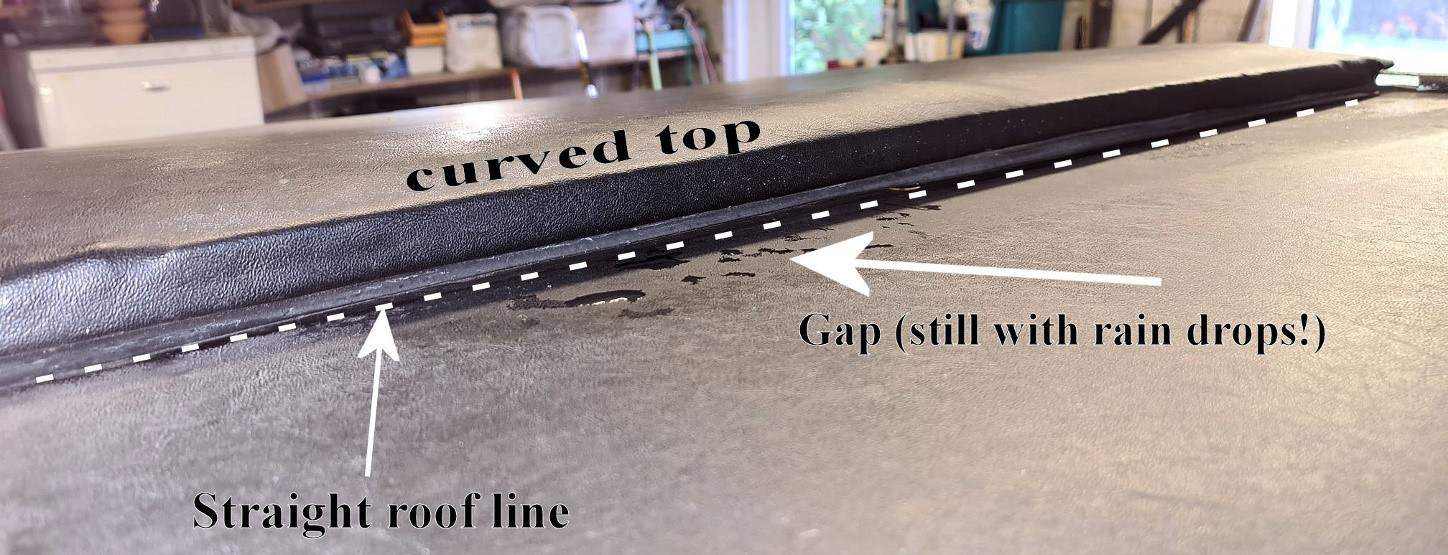 own
each side (the tracks) and one across the rear edge of the hole. At the
Potting Shed we were parked on a slight downward slope with the nose of the car
pointing downwards and, boy, was it raining! When we came back to the car,
water was pouring into our laps from behind the roof lining of the sliding
panel. Back in the garage, I could see that, as we were parked facing downhill,
the rainwater on the roof would have been running forward with the two side
channels directing it down to the rear edge of the sliding panel and the rain
had backed up behind the sliding panel. On inspection, there is a strip of
plastic along the rear of the sliding
own
each side (the tracks) and one across the rear edge of the hole. At the
Potting Shed we were parked on a slight downward slope with the nose of the car
pointing downwards and, boy, was it raining! When we came back to the car,
water was pouring into our laps from behind the roof lining of the sliding
panel. Back in the garage, I could see that, as we were parked facing downhill,
the rainwater on the roof would have been running forward with the two side
channels directing it down to the rear edge of the sliding panel and the rain
had backed up behind the sliding panel. On inspection, there is a strip of
plastic along the rear of the sliding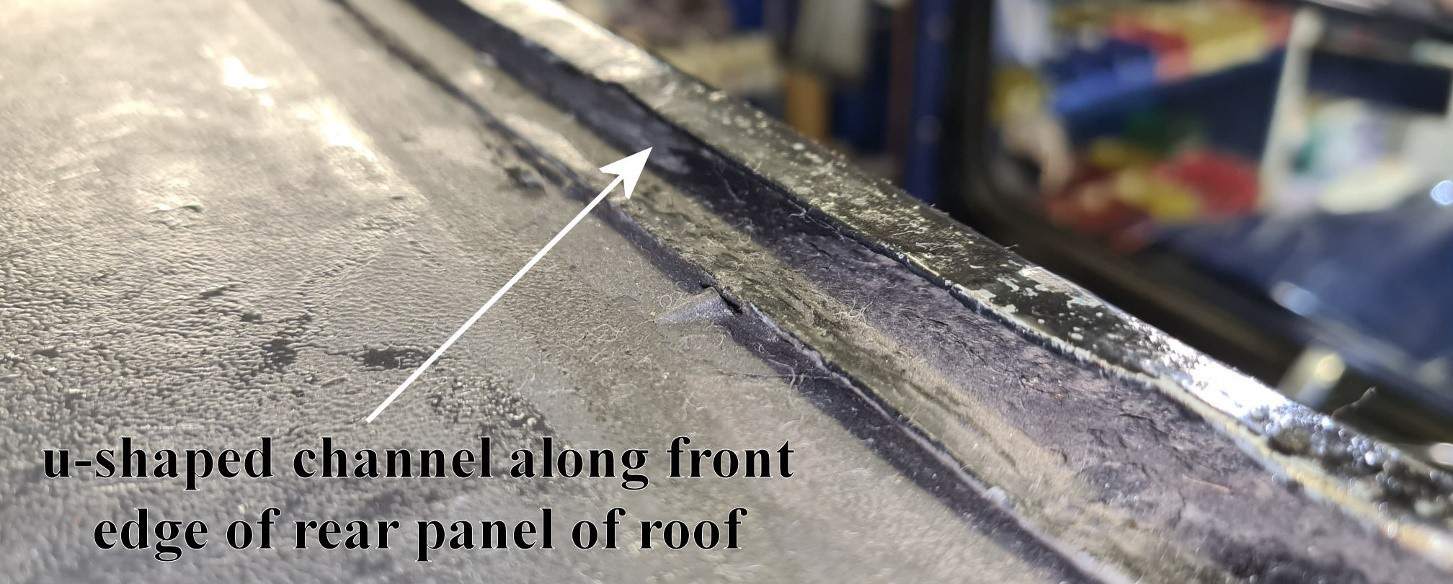 panel designed to stop any water getting under the panel but, given the passage
of time, it had become stiff and wrinkled and there was a definite gap
underneath it. Also, and this may have been a result of the restoration, whilst
the ‘real’ roof at that point is absolutely flat, the sliding panel had a
decided curve.
panel designed to stop any water getting under the panel but, given the passage
of time, it had become stiff and wrinkled and there was a definite gap
underneath it. Also, and this may have been a result of the restoration, whilst
the ‘real’ roof at that point is absolutely flat, the sliding panel had a
decided curve.
Interestingly, the front of the body above the
windscreen is curved whereas across the back it is flat. So, to complete
the detective story, the water must have got under the flap and filled up behind
the cross channel, finally pouring over the lip and into my lap! Whilst
there are tw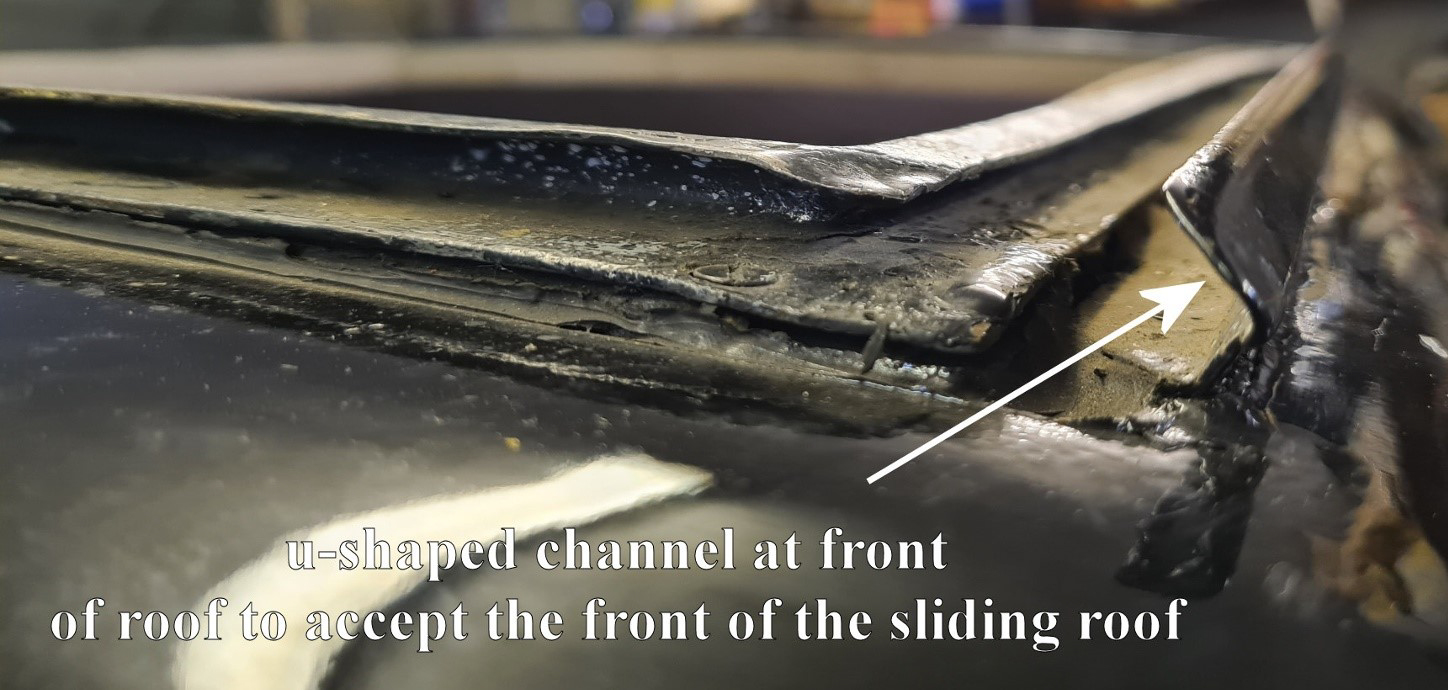 o
escape holes at the ends of the cross-channel built into the side rails, on my
car the holes are set higher than the level of the roof and, with the weight of
the water that day, wouldn’t have been able to carry away the flood quick
enough. Finally, after taking the sliding panel off, it was clear that,
other than the plastic strip across the back of the sliding panel, there are no
rubber seals between the sliding panel and the rest of the roof and the back of
the sliding panel does not go into the u-shaped cross-channel to form a seal
when closed. In fact, as far as I can see, the only thing that stops the
sliding panel when shut is the front lip above the windscreen and there may well
be a gap between the cross-channel and the panel.
o
escape holes at the ends of the cross-channel built into the side rails, on my
car the holes are set higher than the level of the roof and, with the weight of
the water that day, wouldn’t have been able to carry away the flood quick
enough. Finally, after taking the sliding panel off, it was clear that,
other than the plastic strip across the back of the sliding panel, there are no
rubber seals between the sliding panel and the rest of the roof and the back of
the sliding panel does not go into the u-shaped cross-channel to form a seal
when closed. In fact, as far as I can see, the only thing that stops the
sliding panel when shut is the front lip above the windscreen and there may well
be a gap between the cross-channel and the panel.
So, investigation over, what to do about it to stop it
happening again? Clearly, the whole event was probably a one-off with the
heavy rain, the angle of parking and the wonky sealing strip and any solution
didn’t warrant a major overhaul or re-building of the sliding panel. Looking in
my g ash
box, I found some rubber sections from a previous restoration which fitted
perfectly to strengthen the wonky strip and to add a few other rubber edges in
the hope of forming a seal where there wasn’t any before. I can’t do
anything about the escape holes being too high but tried to flatten the rear end
of the sliding panel with a bit of brute force. The right thing to have
done would have been to strip down the sliding panel and re-build it completely
but….. However, the investigation was very interesting, the materials cost me
nothing and, hopefully, there won’t be another flood. Mmm? but where can I
buy a new bucket?
ash
box, I found some rubber sections from a previous restoration which fitted
perfectly to strengthen the wonky strip and to add a few other rubber edges in
the hope of forming a seal where there wasn’t any before. I can’t do
anything about the escape holes being too high but tried to flatten the rear end
of the sliding panel with a bit of brute force. The right thing to have
done would have been to strip down the sliding panel and re-build it completely
but….. However, the investigation was very interesting, the materials cost me
nothing and, hopefully, there won’t be another flood. Mmm? but where can I
buy a new bucket?
David Whetton DA7C